
If you’re working out how to report counterfeit products on Amazon, brand owners have five ways: the Report a Violation tool in Brand Registry, Project Zero’s self-service removal, a test buy with evidence, Amazon’s public infringement form if you’re not brand-registered, and a referral to Amazon’s Counterfeit Crimes Unit for serious or repeat cases. For most brands, Report a Violation is the fastest and most reliable route. Here’s how each method works and what to prepare.
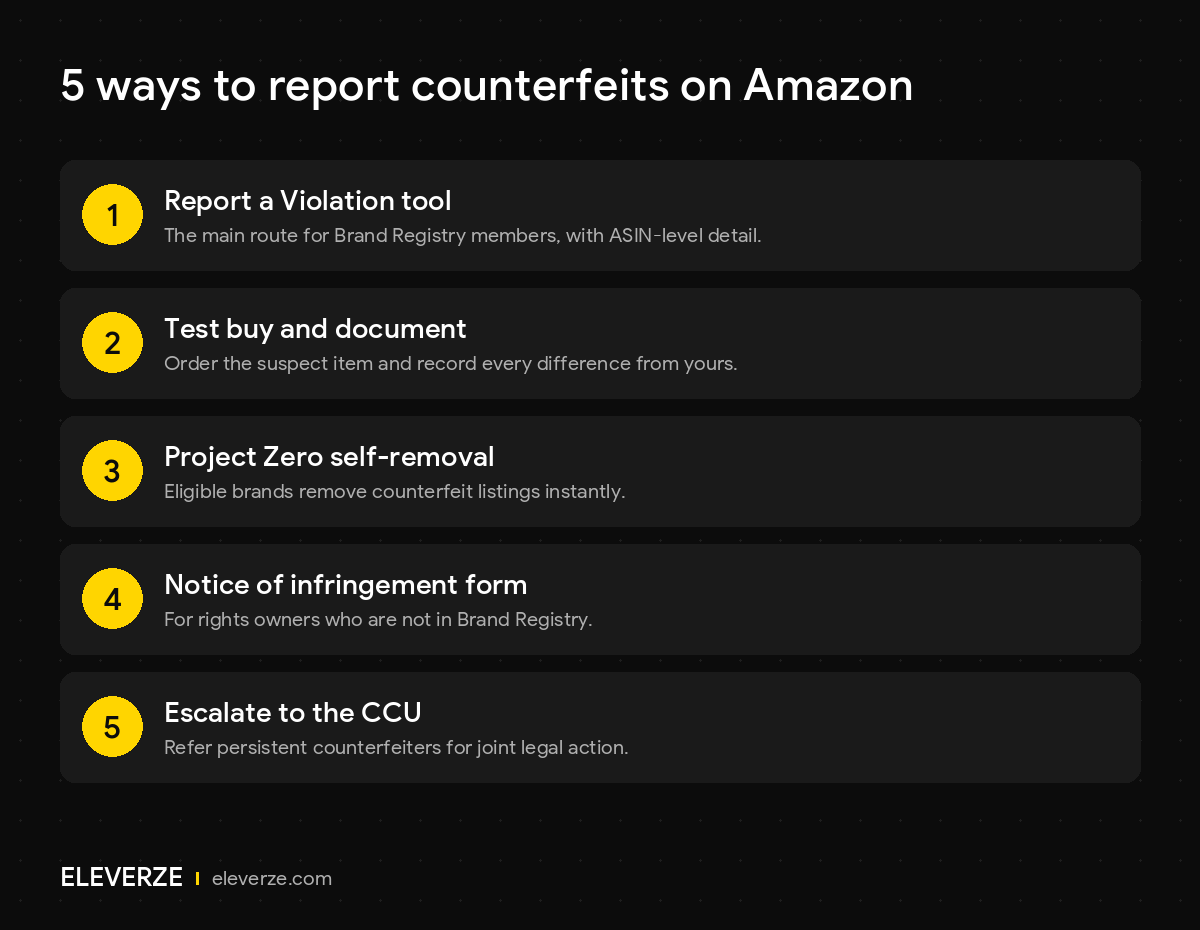
Table of Contents
What to prepare before you report counterfeit products on Amazon
- The ASINs and seller names involved
- Your trademark registration number
- Evidence: photos comparing the fake and genuine product, test-buy order IDs and customer complaints that mention fakes
- A short, factual description of how you know the item is counterfeit
Method 1: Report a Violation (Brand Registry)
Brand Registry’s Report a Violation tool lets you search Amazon’s stores by keyword, ASIN or image, select suspect listings and report them as counterfeit or for trademark, copyright or patent infringement. It’s the standard route for brand-registered sellers, and Amazon tracks your report acceptance rate, so accurate reports build credibility. Amazon’s own guide to reporting violations walks through the tool. New to Brand Registry? See our enrollment guide.
Method 2: Project Zero self-service removal
If your brand is enrolled in Project Zero, you can remove counterfeit listings yourself without waiting for Amazon’s review. Amazon expects high accuracy, and inaccurate removals can cost you access. How Project Zero works.
Method 3: Test buy, then report
When you suspect a seller but can’t prove it from the listing, buy the product. Photograph it next to a genuine unit and note differences in packaging, labels, materials or batch codes. Include the order ID and photos in your report. Test buys are some of the strongest evidence you can provide.
Method 4: Amazon’s infringement form (no Brand Registry)
Rights owners who aren’t brand-registered can still report infringement through Amazon’s public Report Infringement form. It works, but it’s slower and lacks Brand Registry’s search tools. If counterfeits are a recurring problem, enrolling in Brand Registry is worth it.
Method 5: Refer the case to the Counterfeit Crimes Unit
For organized or repeat counterfeiters, Amazon’s Counterfeit Crimes Unit investigates, refers cases to law enforcement and can file joint lawsuits with brands. Brand-registered brands with a registered trademark can work with the CCU; see Amazon’s Counterfeit Crimes Unit page. See our counterfeit lawsuit case studies.
Which reporting method should you use?
| Situation | Best method |
|---|---|
| You’re brand-registered and spot a fake listing | Report a Violation |
| Counterfeits keep reappearing on your ASINs | Project Zero self-service removal |
| A listing looks genuine but you suspect the product | Test buy, then report with photos |
| You don’t have Brand Registry yet | Amazon’s public infringement form |
| The same counterfeiter returns under new accounts | Counterfeit Crimes Unit referral |
Most brands use two or three of these together. Knowing how to report counterfeit products on Amazon through each channel lets you match the tool to the problem instead of filing the same report and hoping.
Mistakes that get counterfeit reports rejected
- Choosing the wrong violation type. Filing a counterfeit as a trademark issue, or the reverse, is one of the most common reasons for rejection.
- No evidence. “This is fake” without photos, order IDs or a clear difference from the genuine product rarely succeeds.
- Reporting authorized resellers. Selling genuine goods you don’t approve of isn’t counterfeiting, and reports like this lower your acceptance rate.
- Bulk reports with copied text. Each Amazon counterfeit report should describe the specific listing and seller.
What happens after an Amazon counterfeit report?
Amazon reviews the report and, if it agrees, removes the listing or the seller’s offer. You’ll see the outcome in Brand Registry’s report history. If a report is rejected, read the reason. It’s usually a missing piece of evidence or the wrong violation type.
How to stop counterfeits from coming back
- Monitor your top ASINs at least weekly for new sellers.
- Enroll in Transparency or Project Zero if counterfeits keep returning.
- Keep your Brand Registry details and product images up to date so Amazon’s automated systems can spot fakes.
- Escalate repeat sellers to the CCU or an IP attorney.
How to report counterfeit products on Amazon: FAQ
How long does Amazon take to remove a counterfeit listing?
Brand Registry reports are often actioned within days. Project Zero self-service removal is immediate.
Can I report a seller just for selling below my price?
No. Pricing isn’t a violation. Report only genuine counterfeits or infringement; false reports hurt your credibility.
What if the counterfeiter comes back with a new account?
Report again, document the pattern and consider escalating to the CCU or legal action.
On the other side of a report? If you are a seller who received a counterfeit complaint, read how to appeal a counterfeit complaint without a test buy.
Need help enforcing your brand?
If you don’t have time to monitor and report every week, our partner DMCA Desk handles monitoring and takedowns for ecommerce brands. See also Amazon brand protection services.


2 thoughts on “How to Report Counterfeit Products on Amazon (5 Methods)”