
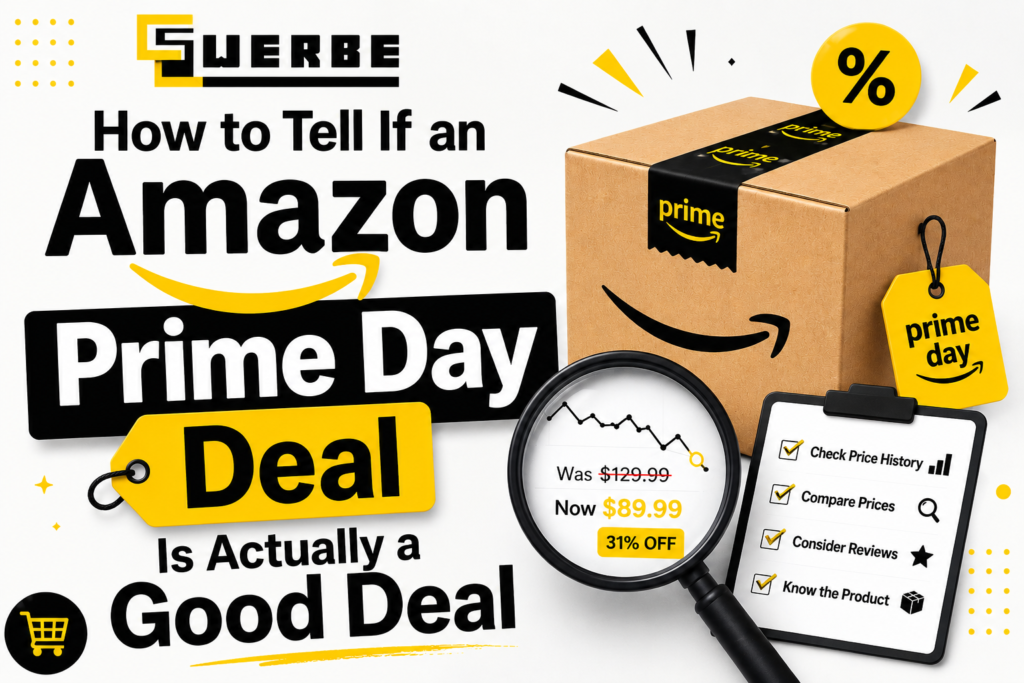
Amazon Prime Day deals flood your screen every July — but not every “deal” is worth your money. Here’s how to shop smarter and actually save.
Amazon Prime Day has grown into a retail phenomenon. Millions of shoppers flood the platform every year chasing Amazon Prime Day deals on electronics, home goods, fashion, and more. But here’s the uncomfortable truth: not every Prime Day deal is actually a good deal.
Amazon’s sale badges, countdown timers, and dramatic percentage-off labels are designed to create urgency. And urgency, more often than not, leads to impulse purchases that you later regret. Before you add anything to your cart, here’s exactly how to tell if an Amazon Prime Day deal is worth it — and how to separate the genuine bargains from the marketing theatre.
1. Check the Price History First
This is the single most important step most shoppers skip when evaluating Amazon Prime Day deals. A product labeled “40% off” might have been quietly inflated in price a few weeks before Prime Day — making the “discount” essentially meaningless.
Tools to use:
- CamelCamelCamel — paste any Amazon product URL and instantly see its full price history. If the current “sale price” is close to what the product has sold for previously, it’s not much of a deal.
- Keepa — another robust price tracker with browser extensions that overlay price history graphs directly on Amazon product pages.
- Honey — automatically checks for coupons and also tracks price drops.
If the item is at or near its all-time low price, that’s a genuinely good deal. If the price has been lower in the past three months, wait it out or skip it entirely.
2. Set Up Deal Alerts Before Prime Day Starts
Don’t wait until Prime Day is live to start hunting. The best strategy is to identify the products you actually want ahead of time, track their prices, and set alerts so you’re notified the moment they hit your target price.
This removes the emotion from shopping — you’re acting on data, not a blinking countdown timer.
For a step-by-step guide on exactly how to set this up, check out: How to Set Amazon Deal Alerts for Prime Day 2026
3. Compare with Prices at Other Retailers
Amazon is not always the cheapest place to buy something, even on Prime Day. Before purchasing, take 60 seconds to check:
- Walmart and Target often run competing sales during Prime Day
- Best Buy, Costco, and B&H Photo frequently match or beat Amazon on electronics
- Google Shopping — search the product name and click the “Shopping” tab to compare prices across retailers instantly
A deal that’s “50% off” on Amazon might be the regular price at a competitor. Or another store might be offering the same discount without requiring a Prime membership.
4. Ask Yourself: Did I Plan to Buy This?
This one sounds simple, but it’s where most people go wrong. Prime Day is brilliant at manufacturing desire for things you didn’t know you wanted.
Before checkout, run through these questions honestly:
- Was this item on my wishlist or shopping list before Prime Day started?
- Do I have a specific, immediate use for this?
- Would I buy it at this price if there were no “Prime Day” banner on it?
- Am I buying it because it’s cheap, or because I genuinely need it?
If you can’t answer yes to most of those, put it back. A discount on something you don’t need is still money spent unnecessarily.
5. Watch Out for These Common Prime Day Tricks
Amazon and its third-party sellers use a number of tactics designed to push you toward purchasing. Know what to look for:
Inflated “list prices”: The “was £199, now £99” framing can be misleading. The list price is often the manufacturer’s suggested retail price, which may never have been the actual selling price. Always verify against the tracked price history.
Lightning Deals: These limited-time, limited-quantity offers are designed for maximum urgency. Some are excellent. Many are on products that were obscure before the sale and will be obscure after it. Only jump on a Lightning Deal if it’s an item you researched in advance.
“Sold by” third parties: Particularly on electronics and accessories, double-check whether you’re buying from Amazon directly or a third-party marketplace seller. Return policies and warranty support can differ significantly.
Bundled products: “Buy two, get 30% off” deals only make sense if you need two. Don’t let bundle pricing trick you into buying more than you planned.
6. Understand What's Genuinely Worth Buying on Prime Day
Some categories consistently deliver real value during Prime Day. Others rarely do.
Categories that tend to have genuine discounts:
- Amazon’s own devices (Echo, Kindle, Fire TV, Ring) — these are almost always at their lowest Prime Day prices
- Large appliances and home goods
- Storage devices, cables, and computer accessories
- Personal care electronics (electric toothbrushes, hair tools)
Categories to approach with more skepticism:
- Trending or viral products (the price may have been manipulated)
- Clothing and fashion (sizing, quality, and return logistics add risk)
- Supplements and health products from unfamiliar sellers
- Toys and kids’ items (worth comparing with physical retailers)
7. Know the Full Picture of Prime Day 2026
Understanding when Prime Day starts, which deals are available, and how the event is structured gives you a significant advantage. Going in blind means you’re reacting; going in prepared means you’re making deliberate decisions.
For a comprehensive overview of everything you need to know this year, including dates, deal categories, and strategies: Amazon Prime Day 2026: The Complete Guide
8. Use Your Cart as a Wishlist — Not a Checkout Queue
One practical tip: add items you’re interested in to your cart or Saved for Later list before Prime Day. Amazon sometimes applies Prime Day discounts automatically to saved items, and you’ll also get a notification if the price changes.
More importantly, it forces a pause. Adding something to your cart and sitting on it for a few hours is often enough to decide you don’t actually want it.
The Bottom Line
Knowing how to tell if an Amazon Prime Day deal is actually a good deal is the difference between real savings and buyer’s remorse. Amazon Prime Day is a legitimate opportunity to save money on things you already planned to buy — but it’s equally an expertly designed environment built to separate you from your money as quickly as possible.
The formula for smart Prime Day shopping is simple:
- Know what you want before the sale starts
- Track the price history so you know what “good” actually looks like
- Compare across retailers before committing
- Ignore the urgency — real savings will still be there in five minutes
Shop with a list, not with FOMO, and Prime Day becomes one of the most useful sales events of the year. Shop impulsively, and you’ll spend July wondering why you have a second air fryer.
Want to get ahead of the deals? Learn how to set deal alerts before Prime Day begins: How to Set Amazon Deal Alerts for Prime Day 2026

2 thoughts on “How to Tell If an Amazon Prime Day Deal Is Actually a Good Deal”