
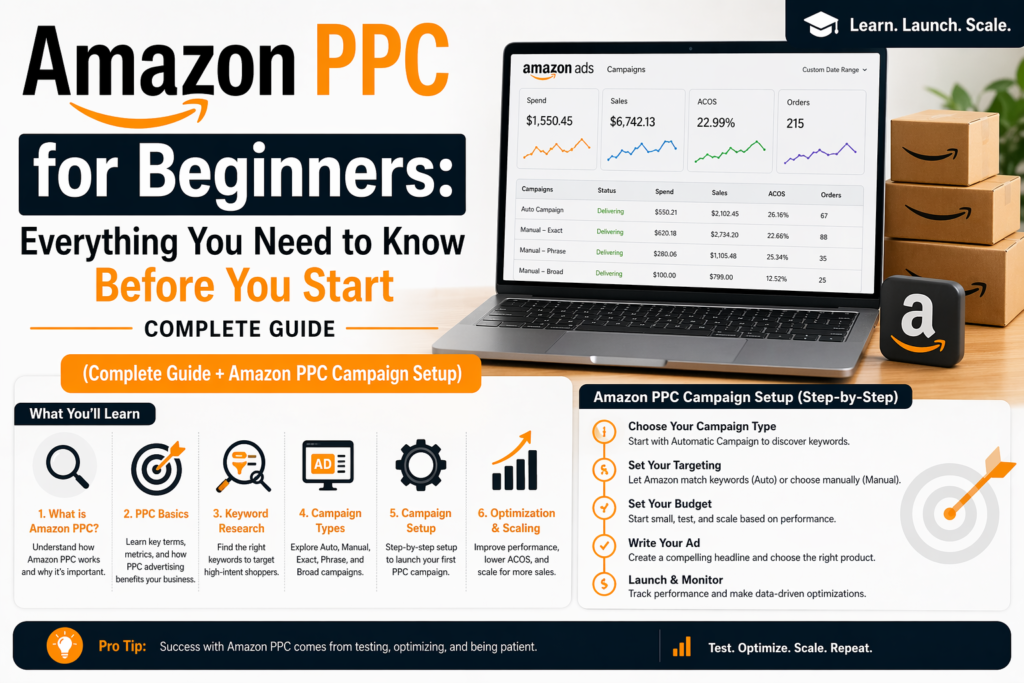
Article Outline (Structured Hierarchy)
• H1: Amazon PPC for Beginners: Everything You Need to Know Before You Start
o H2: What is Amazon PPC and How Does It Work?
H3: The Basics of Pay-Per-Click Advertising
H3: Why Amazon PPC is Essential in 2026
o H2: How Amazon PPC Actually Works Behind the Scenes
H3: The Auction-Based System Explained
H3: Why Relevance Matters More Than Money
o H2: Types of Amazon PPC Ads
H3: Sponsored Products
H3: Sponsored Brands and Sponsored Display
o H2: Amazon PPC Campaign Setup for Beginners
H3: Step 1: Keyword Research
H3: Step 2: Campaign Structure
H3: Step 3: Budget and Bid Setup
o H2: Understanding Keywords and Match Types
H3: Broad, Phrase, and Exact Match
H3: Buyer Intent and Search Behavior
o H2: Budgeting and Bidding Strategies
H3: How Much Should Beginners Spend?
H3: Smart Bidding Techniques
o H2: Common Beginner Mistakes in Amazon PPC
H3: Spending Without Strategy
H3: Ignoring Listing Optimization
o H2: Tips to Improve Your PPC Performance
H3: Optimize Listings for Conversions
H3: Use Data to Scale Campaigns
o H2: Future Trends in Amazon PPC
H3: AI and Automation
H3: Shift Toward Intent-Based Advertising
o H2: Conclusion
o H2: FAQs
What is Amazon PPC and How Does It Work?
If you’re just starting your journey as an Amazon seller, you’ve probably heard the term Amazon PPC thrown around like it’s some kind of secret weapon—and honestly, it is. But here’s the thing: it’s not as complicated as it sounds once you break it down.
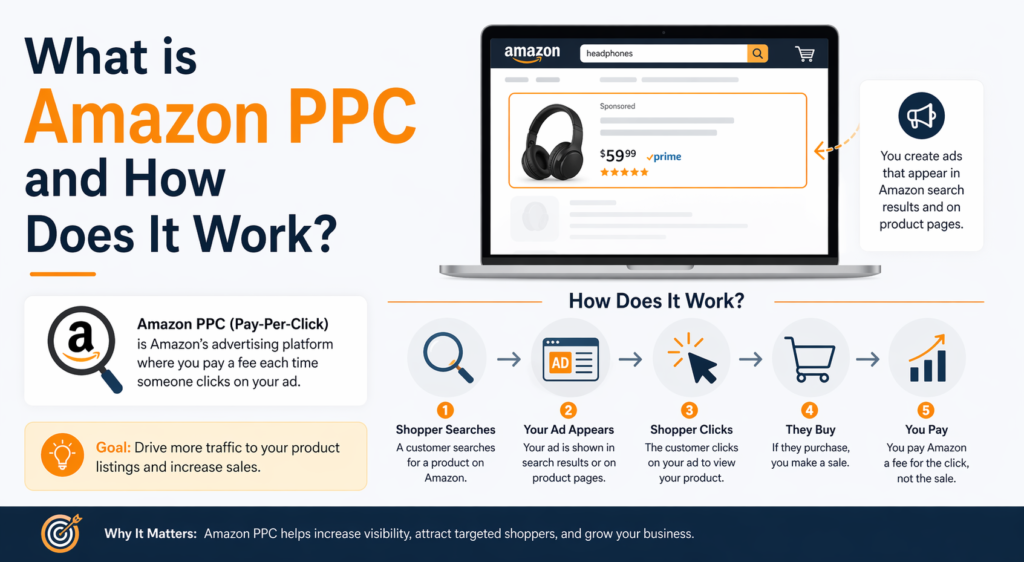
Amazon PPC (Pay-Per-Click) is an advertising model where you pay only when someone clicks on your ad—not when it’s shown. That means you’re paying for actual interest, not just visibility. Your product appears in search results or on product pages, and when a shopper clicks it, you’re charged a small fee. Simple, right? Well, not quite. Under the hood, Amazon runs a complex auction system that decides when and where your ad appears.
Here’s what makes it powerful: you don’t have to wait months to rank organically. PPC gives you immediate exposure. In fact, many sellers use it as a launch strategy to generate early sales and boost rankings.
The Basics of Pay-Per-Click Advertising
Think of Amazon PPC like bidding for attention in a crowded marketplace. Every seller wants their product at the top, but only a few can get there. When someone searches for a keyword, Amazon runs an instant auction between advertisers targeting that keyword.
The winner? Not always the highest bidder. Amazon also considers relevance and performance. So even if your budget is smaller, you can still compete if your product resonates with shoppers.
Why Amazon PPC is Essential in 2026
In today’s Amazon ecosystem, relying on organic traffic alone is like opening a shop in the desert and hoping people magically show up. It doesn’t work anymore.
Recent data shows that Amazon PPC has become one of the fastest ways to gain visibility and drive sales, especially for new sellers entering competitive markets.
On top of that, advertising costs are rising, with cost-per-click increasing by 15–30% in many categories, making strategy more important than ever.
How Amazon PPC Actually Works Behind the Scenes
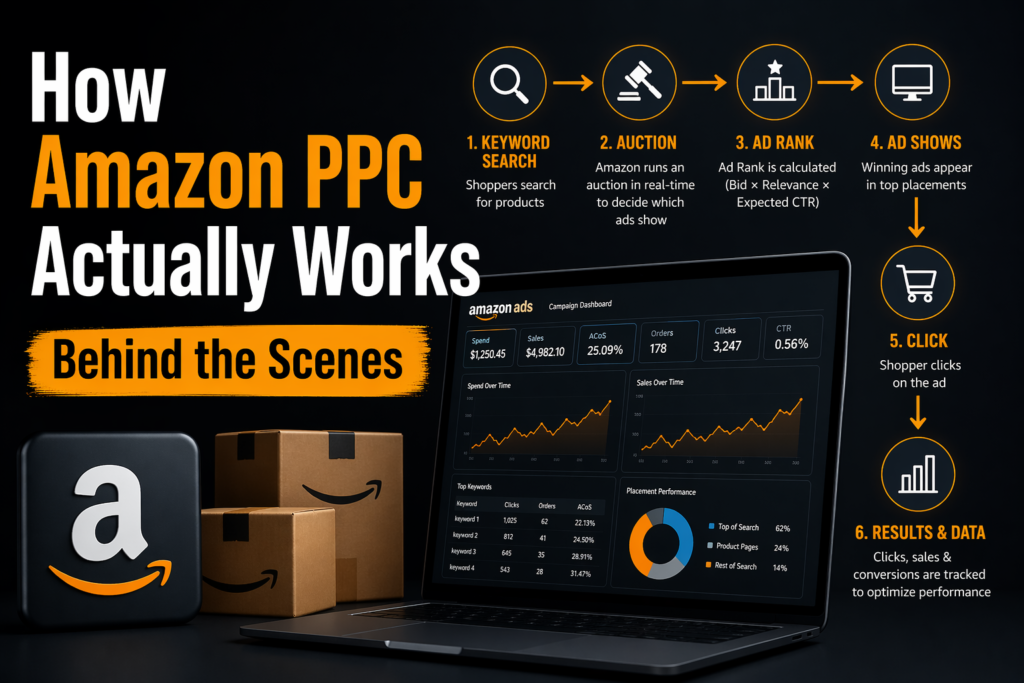
Now let’s peel back the curtain. What really happens when you launch an ad?
Amazon doesn’t randomly show ads—it uses an auction system that evaluates multiple factors in milliseconds.
The Auction-Based System Explained
Every time a shopper searches for a product, Amazon runs an auction between advertisers targeting that keyword. Each seller submits a bid (the maximum they’re willing to pay per click), but the final decision isn’t just about money.
Amazon looks at:
• Your bid
• Product relevance
• Historical performance
This means your ad’s success depends on how well your product matches what customers are searching for—not just how much you’re willing to spend.
Why Relevance Matters More Than Money
Here’s where beginners often get it wrong: they think increasing bids will fix everything. It won’t.
Amazon prioritizes customer experience. If your product doesn’t convert or match the search intent, your ad will lose—even with a higher bid.
In 2026, Amazon’s algorithm focuses heavily on intent, listing quality, and performance signals, not just keywords.
Types of Amazon PPC Ads
Before diving into your amazon ppc campaign setup, you need to understand the types of ads available.
Sponsored Products
This is the most common and beginner-friendly ad type. Your product appears directly in search results, blending in with organic listings.
It’s ideal for:
• Driving sales
• Ranking keywords
• Testing demand
Sponsored Brands and Sponsored Display
These are more advanced options.
• Sponsored Brands help build awareness with banners and logos
• Sponsored Display allows retargeting and off-Amazon advertising
For beginners, starting with Sponsored Products is usually the smartest move.
Amazon PPC Campaign Setup for Beginners
Let’s get practical. Setting up your first campaign doesn’t have to feel overwhelming.
Step 1: Keyword Research
Keywords are the backbone of your campaign. Without them, your ads won’t reach the right audience.
Focus on:
• High-intent keywords (buying keywords)
• Relevant product terms
• Competitor keywords
Think of keywords as the bridge between your product and your customer.
Step 2: Campaign Structure
A smart structure makes everything easier later.
A simple beginner setup:
• One automatic campaign (for discovery)
• One manual campaign (for control)
Automatic campaigns let Amazon find keywords for you, while manual campaigns let you target specific ones.
Step 3: Budget and Bid Setup
Start small. You don’t need a huge budget to begin.
Typical beginner benchmarks:
• Daily budget: $5–$15
• Test period: 2–4 weeks
• Focus: data collection, not profit
Your goal in the beginning isn’t to make money—it’s to learn what works.
Understanding Keywords and Match Types
Keywords are not just words—they’re signals of intent.
Broad, Phrase, and Exact Match
Each match type serves a purpose:
• Broad match: reaches a wide audience
• Phrase match: more control
• Exact match: highest precision
Using all three gives you a balance between discovery and efficiency.
Buyer Intent and Search Behavior
In 2026, Amazon doesn’t just look at keywords—it looks at intent.
For example:
• “Best running shoes” = research
• “Buy running shoes size 10” = purchase intent
Targeting the right intent can dramatically improve your conversions
Budgeting and Bidding Strategies
How Much Should Beginners Spend?
Start with a manageable budget. Amazon allows you to set daily limits, so you’re always in control.
Remember, PPC is not an expense—it’s an investment in visibility and data.
Smart Bidding Techniques
Instead of guessing, follow data:
• Increase bids on winning keywords
• Decrease bids on poor performers
• Use dynamic bidding to let Amazon optimize
Common Beginner Mistakes in Amazon PPC
Everyone makes mistakes—but the key is avoiding the costly ones.
Spending Without Strategy
Throwing money at ads without understanding your data is like driving blindfolded. You might move forward, but you’ll crash eventually.
Ignoring Listing Optimization
Your ad brings traffic—but your listing closes the sale.
If your product page is weak, even the best PPC strategy won’t save you.
Tips to Improve Your PPC Performance
Want better results? Focus on the fundamentals.
Optimize Listings for Conversions
High-quality images, compelling titles, and strong reviews can dramatically improve performance.
Use Data to Scale Campaigns
Don’t rely on guesses. Use your campaign data to:
• Identify winning keywords
• Eliminate waste
• Scale profitable ads
Future Trends in Amazon PPC
Amazon PPC isn’t static—it’s evolving fast.
AI and Automation
Automation tools are becoming essential. They help manage bids, optimize campaigns, and save time.
Shift Toward Intent-Based Advertising
Amazon is moving away from keyword-only targeting and focusing more on shopper behavior and intent.