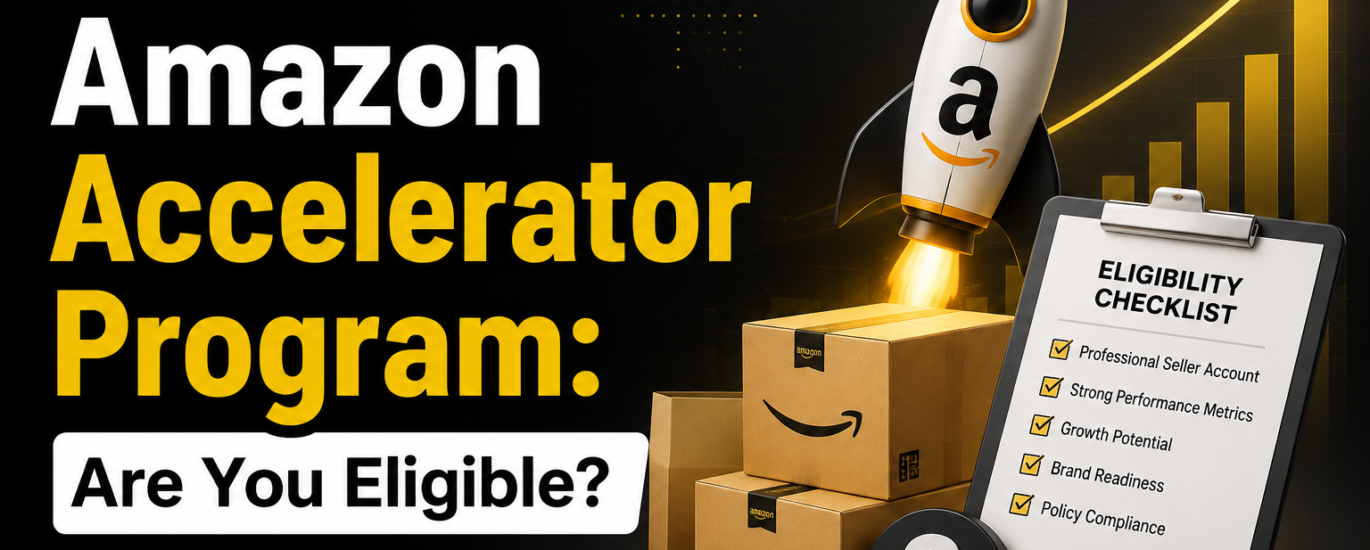
Amazon Accelerator is an invite-and-apply program that lets established manufacturers sell their products directly under Amazon’s own private-label umbrella, in exchange for onboarding support, marketing placement, and faster account growth. It is not the same program as Brand Registry or IP Accelerator, and eligibility is stricter: Amazon generally looks for manufacturers doing $500K or more in annual revenue, with the supply-chain control to keep stock levels healthy and a willingness to commit meaningful ad spend on the platform.
What Amazon Accelerator Actually Is
Amazon Accelerator connects manufacturers and brand owners with Amazon’s private-brand division. Instead of competing purely as a third-party seller, accepted brands get Amazon’s backing on merchandising, onboarding help, and marketing tools designed to scale a catalog faster than an unassisted seller account typically could.
It is aimed specifically at manufacturers who already control production — not resellers, wholesalers, or aggregators reselling someone else’s goods. If your business buys finished inventory from a third party to resell, this program is not built for you; Amazon Listing Optimization and PPC Management are usually the higher-leverage moves instead.
Eligibility Requirements
Amazon does not publish one fixed bar, but based on program guidance and seller reporting, brands typically need to show:
- Revenue scale: roughly $500K+ in annual sales, with many accepted brands trending toward $1M or more.
- Manufacturer status: direct control over production, not a resale or aggregator model.
- Inventory health: consistent stock levels to meet demand without frequent stockouts.
- FBA commitment: Amazon expects the large majority of units fulfilled through FBA, with FBM as a fallback only.
- Ad spend commitment: a meaningful share of revenue (often cited around 5%) reinvested into Amazon advertising.
- Eligible category: your products need to fall within the specific categories Amazon currently accepts into the program.
Accelerator vs. Brand Registry vs. IP Accelerator
These three get confused constantly because they all have “Amazon” and a growth-sounding word in the name, but they solve different problems. Brand Registry protects your trademarked brand and unlocks brand-owner tools; IP Accelerator helps you get a provisional trademark recognized faster so you can enroll in Brand Registry sooner; Accelerator is a revenue-scale partnership program layered on top of an already-established, already-protected brand. Most sellers should have Brand Registry in place well before Accelerator eligibility becomes relevant — see our breakdown of IP Accelerator vs. Brand Registry if you have not enrolled yet.
Is It Worth Applying?
Accelerator makes the most sense for manufacturers who have already outgrown a standard seller account and want Amazon’s merchandising weight behind a wider push, and who can absorb the ad-spend and FBA commitments without straining cash flow. For brands still building toward consistent six-figure-plus revenue, the higher-leverage move is usually tightening PPC efficiency and listing quality first xe2x80x94 applying to Accelerator before the fundamentals are solid tends to waste the opportunity rather than accelerate it.
FAQ
Is Amazon Accelerator the same as Amazon Launchpad?
No. Launchpad is aimed at early-stage and startup brands launching new products, while Accelerator targets established manufacturers with existing revenue scale wanting a deeper private-brand partnership.
Do I need Brand Registry before applying to Accelerator?
Amazon does not always require it as a hard prerequisite, but in practice most accepted brands already have Brand Registry and trademark protection in place, since Accelerator assumes a mature, protected brand.
What happens if I fall below the revenue threshold after being accepted?
Amazon periodically reviews program participation, and sustained drops in sales, stock health, or ad investment can put continued participation at risk, though exact enforcement varies by account.
Can a reseller or aggregator apply?
No. The program is built for manufacturers with direct control over production, not businesses reselling goods they do not manufacture.